
Abstract
A significant number of scientific data concerning breast cancer is generated in Turkey. The present research reviewed postgraduate theses examining the psychological evaluation of breast cancer patients conducted in Turkey. The objective of the review study was to ascertain the focal topics of the theses, identify commonly examined psychological variables, determine research gaps, compare the frequency of experimental and intervention studies with other kinds of research, and provide recommendations for literature. A retrospective descriptive study was designed by performing a search on the YÖK Thesis Center website with the keywords “breast cancer” and “psychology” (in Turkish and English) between 2000 and 2024. The criteria for inclusion in the review study required that the dissertation be a master’s or doctoral thesis in psychology, involve breast cancer patients as participants, focus on patients who are not in remission, and be available as open access. Twenty-seven postgraduate theses were selected. Of the theses 88.9% were classified as master’s theses, while 11.1% were categorized as doctoral theses. Although the variables included in the these studies were numerous, some were investigated more often. “Post-traumatic growth” was evaluated by 12 theses, “perceived social support” by 6, “depression-anxiety-stress” by 15, and “coping” by 8. more frequently observed factors include metacognition, ruminative thinking, schemas, body perception/image, and self-esteem. Most of the studies were relational and non-interventional. Only three studies used psychological intervention. It is suggested that thesis studies should include more participant characteristics, control for them in analyses, and be more experimental and effectiveness focused.
Keywords: Breast cancer, psychology, postgraduate thesis, review
Key Points
• The theses examined were mostly prepared descriptively and cross-sectionally.
• The characteristics of the participants who had breast cancer were not homogeneous. The participants need to be limited according to their medical and socio-demographic characteristics.
• The number of psychological intervention studies produced for breast cancer patients has increased with the theses conducted in recent years.
Introduction
Breast cancer is defined as a disease with different subtypes and different characteristics (). Characterized by a tumor found in the breast tissue, this disease can usually be seen in the lobules and milk ducts that produce milk (). According to World Health Organization data, breast cancer has been reported as the most common type of cancer in women worldwide, and approximately 2.3 million people have been diagnosed with this disease as of 2023 (). Although it is known to be mostly common among women, the incidence of this disease in men is between 0.5% and 1% (). When breast cancer statistics in Turkey were examined, the most up-to-date information was from 2018, and it was reported that the lifetime probability of contracting this disease is 1 in 8 (). The fact that 1 in 4 women diagnosed with cancer have breast cancer and that the age of onset is decreasing () shows that this disease should be considered a public health concern in Turkey.
Recent literature indicates advances in the diagnosis, prognosis, and therapy of breast cancer. Surgical and oncological treatments (radiotherapy, chemotherapy and hormone therapy) are the most widely used methods for this disease (). In addition to all the physical effects after a cancer diagnosis, another important consideration for the patient is survival (). Naturally, psychological variables come into play in this process and can affect the prognosis of the disease, the quality of life and the psychological state of the patient (). The most common psychological processes are depressive symptoms, anxiety, stress and trauma symptoms (). Their levels may vary depending on individuals, the stage of cancer, the type of treatment and the person’s environmental support ().
Another area at the intersection of breast cancer and psychology is psychological intervention. The importance of adding psychological treatments to all treatment protocols in addition to medical treatments for breast cancer patients has been highlighted (). Both types of treatment can improve the quality of life by treating the patient holistically ().
The information reviewed above is the results of scientific studies. Academic knowledge is produced in a certain systematic order and presented to the literature in different forms (). Theses are one form of academic knowledge production. These studies, which are conducted as part of postgraduate education, both improve students’ academic knowledge and skills and expand the academic literature (). While breast cancer literature is rapidly developing both internationally and nationally, it may be seen that some variables are frequently repeated and similar methods are used, especially in postgraduate theses in the national literature. In addition, when preparing postgraduate theses, what kind of studies (knowledge gaps) are needed may be overlooked.
Evaluation of these problems were the aim of the current study. Postgraduate theses prepared in universities in Turkey examining the psychological characteristics of breast cancer patients were reviewed and the results obtained within the scope of the above information constituted the output of this review. Especially in the field of breast cancer, the psychology literature is increasing, and it is necessary to identify the knowledge gaps with a more general view for the studies to be carried out. Thus, psychology theses including breast cancer patients were reviewed. By reviewing both general information about the theses (such as the year the thesis was written, the type of the thesis, the title of the academic advisor) and the content information of the theses, questions emerged as to which areas the studies were concentrated in the theses, which variables and methods were less often addressed in the studies, and what the distribution was in terms of participant characteristics.
The findings obtained through this review will guide future studies to areas of need, will provide methodological strengthening of new thesis studies, and will demonstrate the accumulation of knowledge revealed over the years by presenting a summary of the postgraduate theses conducted to date. With this review, a general scope assessment will be made for future studies and points to be considered will be highlighted.
Literature Search Strategy
A review was created for the purpose of retrospectively examining postgraduate theses written in Turkey and registered with the YÖK Thesis Center, which included the subject of breast cancer. For this purpose, the research was designed in a retrospective descriptive method. To provide the data for the current study, a search was conducted between 10.06.2024 and 10.07.2024 on the web page of the Council of Higher Education Thesis Center (2024). The keywords “breast cancer” and “psychology” were first used for the search (in Turkish and English) between the years 2000 and 2024. Then, from the advanced search tab, the department was limited to “Psychology Department”, “General Psychology Department” and “Clinical Psychology Department”.
Inclusion/Exclusion Criteria
The review includes studies that were published prior to July 2024. The inclusion criteria were:
1. Language: Theses written in Turkish or English.
2. Population: Breast cancer patients.
3. Intervention, comparator, and outcome: postgraduate psychology theses that accept breast cancer patients as participants and investigate psychological processes.
4. Study design: Quantitative or qualitative designs.
The exclusion criteria were: () closed to access; () population: participants were breast cancer patients in remission; () main field: a field outside the department of psychology.
Procedure
The examined theses were accessed via the YÖK Thesis Center web page. For theses uploaded to this system, authors can manage whether to give approval for sharing the information of theses while logging into the system. Therefore, theses that have been approved can be examined. For this reason, it was not necessary to obtain approval from the authors of the theses and the ethics committee.
The abstracts and titles of the acquired studies were subsequently assessed. Studies eligible for open access were determined by the analysis of the abstract and title. The qualifying theses were identified subsequent to the study review. The author extracted data from each study. This data encompasses the study’s author, year, title, country, objective, participants, data collection method, scales, research design, methodologies, and research findings.
In the review it was found that the studies were quite heterogeneous about method, even though only quantitative and qualitative studies were examined. The investigations exhibited significant variations in several aspects, including the socio-demographic and medical attributes of the participants, the instruments utilized, and the variables analyzed. This may complicate the meta-analysis procedure. Consequently, it was posited that narrative synthesis would be appropriate for analyzing psychological characteristics in studies involving breast cancer patients ().
In the initial search, there were 1769 theses, of which 1728 were from other fields (medicine, social work etc.) and were removed. The author screened the titles and abstracts of the 41 remaining theses by considering the inclusion and exclusion criteria. After screening the titles and abstracts, an additional 14 were removed for the following reasons: Six included participants in remission period; five included both breast cancer patients and relatives; two were on breast cancer but without a diagnosis from the participants; and one was inaccessible. This resulted in 27 these being included ().
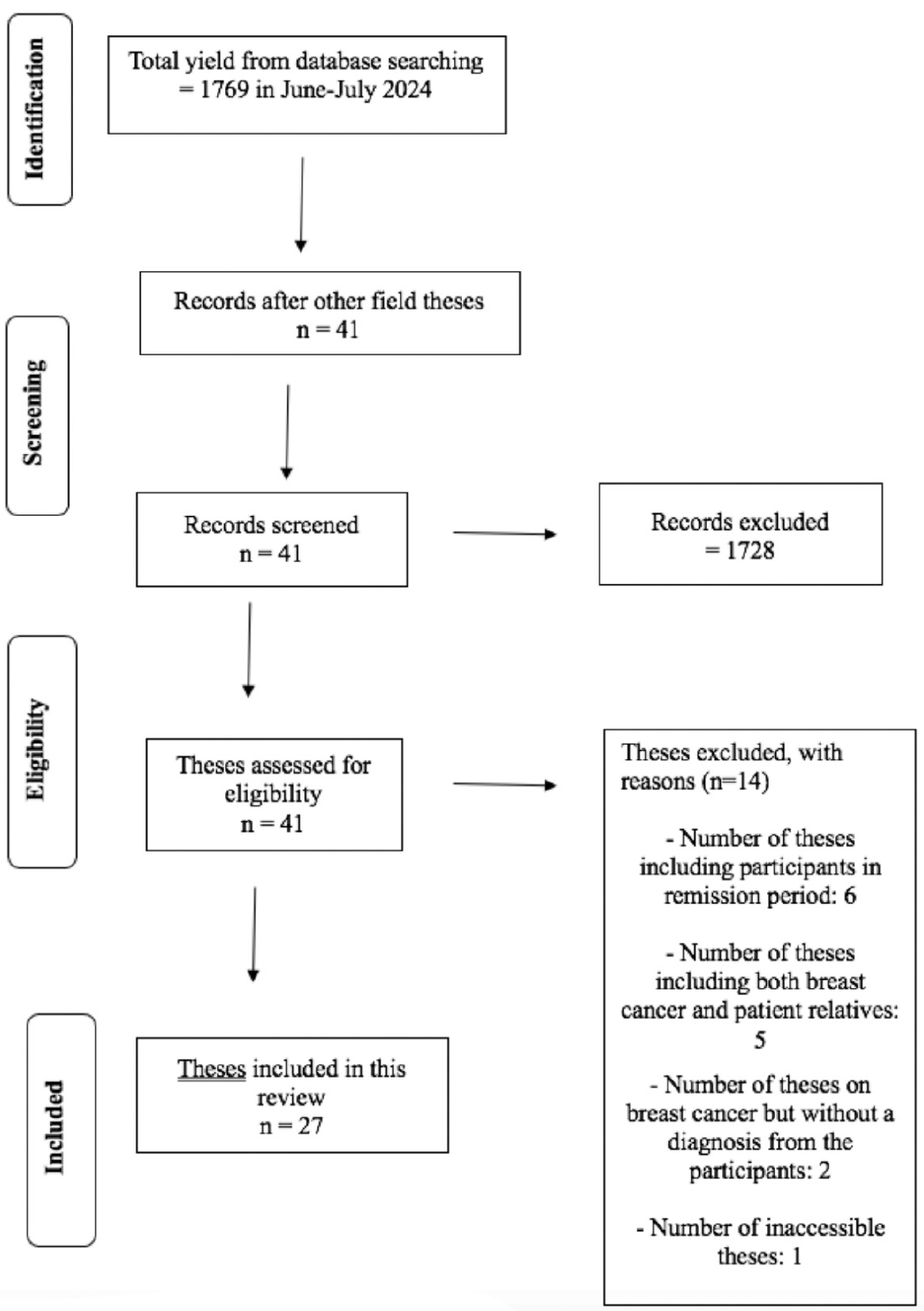
The data of the studies evaluated were entered into SPSS for Windows, version 25.0 (IBM Inc., Armonk, NY, USA). A separate column was defined for each variable to be examined. A separate table was created for the findings of the theses examined and the findings of the theses were summarized.
Results
The characteristics of the theses selected for the present study are summarized in two tables. contains general information about the theses, while contains summary information about the theses’ contents.
Table 1. General information about theses
Author | Type of thesis and year written | Title | University | Thesis advisor title | Type of study | Number of participants (person diagnosed with breast cancer) | Control group (healthy female participants) Number | Where data is collected | |
|---|---|---|---|---|---|---|---|---|---|
1 | Yola (31) | Master | The mediating roles of coping styles and perceived social support between dispositional hope and posttraumatic growth/PTSD relationships among postoperative breast cancer patients: A longitudinal study | Middle East Technical University | Asst. Prof. | Longitudinal | 73 | None | Ankara |
2 | Önder (16) | Master | The mediating role of coping strategies in the basic personality traits PTG and locus of control PTG relationships in breast cancer patients | Middle East Technical University | Assoc. Dr. | Descriptive and cross-sectional | 114 | None | Ankara |
3 | Sarısoy (22) | Master | An investigation of posttraumatic growth rate and factors that predict posttraumatic growth in breast cancer patients | Hacettepe University | Prof. Dr. | Descriptive and cross-sectional, scale adaptation | 63 | None | Ankara |
4 | Olgar (32) | Master | The relationship between locus of control and posttraumatic growth in women diagnosed with breast cancer | Okan University | Asst. Prof. | Descriptive and cross-sectional | 91 | None | Ankara |
5 | Coşar (23) | Master | An investigation of the predictors of post traumatic growth among post-operative breast cancer patients | Uludağ University | Assoc. Dr. | Descriptive and cross-sectional | 66 | None | İstanbul |
6 | Bellur (33) | Master | The relationship of environmental personal and event related factors with post - traumatic growth in breast cancer patients | Mersin University | Asst. Prof. | Descriptive and cross-sectional, scale adaptation | 134 | None | Mersin |
7 | Dönmez (34) | Master | The relationships between i̇llness perception and metacognition, early maladaptive schemas, negative automatic thoughts among cancer patients | Ankara University | Prof. Dr. | Descriptive and cross-sectional | 122 | None | Ankara |
8 | Aydoğdu (35) | Master | Factors related with psychological distress and posttraumatic growth in women with breast cancer: Core beliefs, rumination and type C personality | Dokuz Eylül University | Prof. Dr. | Descriptive and cross-sectional | 201 | None | İzmir |
9 | Alamış (36) | Master | The relationship between illness perception,anxiety,depression and marital adjustment in patients with breast cancer: A controlled study | Işık University | Prof. Dr. | Causal comparative | 35 | 35 | Eskişehir |
10 | Güler (37) | Master | Examination of body image perception and sexual experiences of women treated with breast conserving surgery and mastectomy for breast carcinoma | Üsküdar University | Asst. Prof. | Descriptive and cross-sectional | 100 | None | Hatay |
11 | Geyikçi (38) | Master | Anxiety and depression level of breast cancer patients who completed the first year and their coping attitudes with the disease | Çağ University | Prof. Dr. | Descriptive and cross-sectional | 94 | None | Mersin |
12 | Mike (39) | Master | Investigate the depression and hopelessness levely in women with mastectomy and those without mastectomy | İstanbul Gelişim University | Asst. Prof. | Causal comparative | 93 | None | İstanbul |
13 | Özer (40) | Master | Examination of the relationship between depressive symptoms and early maladaptive schemes in breast cancer patients | İstanbul Gelişim University | Asst. Prof. | Descriptive and cross-sectional | 100 | None | Denizli |
14 | Kamsız (41) | Master | Psychology of mastectomy in breast cancer: A comparison between women diagnosed with breast cancer and healthy women | Üsküdar University | Prof. Dr. | Causal comparative | 78 | 78 | İstanbul |
15 | Özdem (17) | Master | The effects of gestalt contact styles on coping styles in breast cancer patients before and after surgical intervention | İstanbul Arel University | Asst. Prof. | Descriptive, longitudinal | 100 | None | İstanbul |
16 | Özdemir (42) | Master | The effect of chemotherapy on self-esteem and psychological wellbeing in individuals diagnosed with breast cancer | University of Health Sciences Turkey | Asst. Prof. & Assoc. Dr. | Causal comparative | 60 | 59 | İstanbul |
17 | Kanmaz (43) | Master | Investigation of effect of mastectomy and reconstructive operation after mastectomy on depression, self-esteem, and self-efficacy among breast cancer patients | Hasan Kalyoncu University | Prof. Dr. | Causal comparative | 107 | 133 | Mersin |
18 | Kantarcı (44) | Master | Examination of psychic functioning of women who associated breast cancer through projective tests | İstanbul Arel University | Asst. Prof. | Qualitative, descriptive | 3 | None | İstanbul |
18 | Küçükkavradım, (45) | Master | Investigation of the relationship between body and social support perception to depression level in a group of women with mastectomy | Işık University | Asst. Prof. | Causal comparative | 75 | 125 | İstanbul & Antalya |
20 | Aras (46) | Master | Investigation of factors affecting the development of post-traumatic growth in breast cancer patients | İbn Haldun University | Asst. Prof. | Descriptive and cross-sectional | 68 | None | İstanbul |
21 | İğci (47) | Master | Comparison of the effects of pre- and postoperative meta-cognitive beliefs on depression, anxiety levels and fear of recurrence levels of women with breast cancer | İstanbul Kent University | Asst. Prof. | Causal comparative | 45 | None | İstanbul |
22 | Arıtürk (26) | Doctorate | Adaptation and effectiveness of mindfulness based cognitive therapy program for improving quality of life in breast cancer patients | Ege University | Prof. Dr. | Effectiveness | 38 | 18 | İzmir |
23 | Kaplan (48) | Master | The relationship between self-compassion and traumatic growth in female patients diagnosed with breast cancer | Nişantaşı University | Asst. Prof. | Causal comparative | 77 | 77 | Mersin |
24 | Taş (49) | Master | Determinants of psychological distress and post-traumatic growth levels of breast cancer survivors during the COVID-19 pandemic: A controlled study | Işık University | Assoc. Dr. & Asst. Prof. | Causal comparative | 95 | 87 | İstanbul |
25 | Babadostu (50) | Master | An invastigation of the relationship between fear of cancer recurrence, intolerance of uncertainty, metacognitions and coping strategies among breast cancer survivors | Maltepe University | Asst. Prof. | Descriptive and cross-sectional | 130 | None | Türkiye |
26 | Yastıbaş-Kaçar (25) | Doctorate | An investigation of the effectiveness of an online group therapy focused on post-traumatic growth in women with breast cancer | Dokuz Eylül University | Prof. Dr. | Effectiveness | 32 | 17 | Eskişehir |
27 | Ülbe (24) | Doctorate | Developing and testing effectiveness of an online individual intervention program to make meaning of experiences after a breast cancer diagnosis | Dokuz Eylül University | Prof. Dr. | Effectiveness | 41 | 21 | İzmir |
Table 2. Informations on the contents of theses
Data collection method | Scales | Does it include psychological intervention? | Cancer stage | Additional treatments | Surgical intervention | Metastasis | History of cancer | Thesis results | |
|---|---|---|---|---|---|---|---|---|---|
1 | Face to face | Ways of Coping Scale, Multidimensional Scale of Perceived Social Support, Hope Scale, Posttraumatic Growth Scale, Impact of Event Scale | No | 1,2, 3, & 4 | Radiotherapy Chemotherapy Hormone therapy | Yes | No information | No information | No mediating effects of problem-focused coping strategy and perceived social support and its sources were found in the relationship between hope orientation and post-traumatic growth and its subscales. Similarly, emotion-focused coping strategy did not have a mediating effect in the relationship between hope orientation and post-traumatic stress disorder and its subscales. However, perceived social support and perceived social support from friends were reported to have a moderating effect in the relationship between hope orientation and post-traumatic growth. |
2 | Face to face | Basic Personality Traits Inventory, Locus of Control Scale, Turkish Ways of Coping Scale and Post-Traumatic Growth Scale | No | 1,2,3, & 4 | Radiotherapy Chemotherapy Hormone therapy | Yes | No information | No information | Problem-focused coping was found to have a significant mediating effect on the relationships between some basic personality traits (extraversion, openness to experience, conscientiousness, agreeableness) and post-traumatic growth and external locus of control. However, emotion-focused coping was a significant mediating variable in the relationships between some personality traits (conscientiousness, agreeableness, openness to experience) and external locus of control. Social support seeking also significantly mediated the relationship between post-traumatic growth and external locus of control. |
3 | Face to face | Traumatic Stress Symptom Scale, Ways of Coping Inventory, Posttraumatic Growth Inventory, Hospital Anxiety and Depression Scale, Cancer Patient Social Support Scale, Cancer Thoughts Scale | No | 1,2, & 3 | Radiotherapy Chemotherapy Hormone therapy | Yes | Yes | Yes | The internal consistency of the Cancer Thoughts Scale and the Negative Thoughts and Positive Thoughts subscales of the scale was found to be satisfactory. For the total score of post-traumatic growth and the Interpersonal Relations subscale, time since diagnosis, helpless coping approach and positive thoughts about cancer were found to be predictors. For the Self-Perception subscale of post-traumatic growth, time since diagnosis, traumatic stress symptom level and confident coping approach were found to be predictors. For the Value of Life subscale of post-traumatic growth, time since diagnosis and negative thoughts about cancer were found to be predictors. For the New Options subscale of post-traumatic growth, time since diagnosis and confident coping approach were found to be predictors. |
4 | Face to face | Rotter’s Internal-External Locus of Control Scale and Posttraumatic Growth Scale | No | No information | Radiotherapy Chemotherapy Hormone therapy | Ye | No information | No information | A negative and significant relationship was found between locus of control and post-traumatic growth. In terms of post-traumatic growth, the pre-diagnostic examinations such as ultrasound, treatment methods such as radiotherapy and surgery, family history of disease and breast self-examination were found to have significant effects. |
5 | Face to face | Self-Evaluation Scale, Social Support Scale, Ruminative Thinking Style Scale, Coping Styles Scale, Locus of Control Scale, Post-Traumatic Growth Inventory | No | 1,2,3, & 4 | Hormone therapy | Yes | Yes | No information | The stage of the disease significantly predicted the total post-traumatic growth level and the subscale of change in interpersonal relationships. After controlling for the stage of the disease, social support was found to be associated with total posttraumatic growth and change in interpersonal relationships. Breast cancer patients with higher social support showed greater total post-traumatic growth and change in interpersonal relationships. The increased use of a self-confident approach as a coping strategy was found to be associated with an increase in change in philosophy of life. |
6 | Face to face | Dyadic Adjustment Scale-Revised, Impact of Event Scale-Revised Form, Posttraumatic Growth Scale, Ways of Coping Inventory, Multidimensional Scale of Perceived Social Support, General Self-Efficacy Scale | No | No information | No information | No information | No information | No information | It was observed that perceived social support from family increased as the time passed since the diagnosis. Participants who had experienced trauma before being diagnosed with breast cancer used a helpless coping style more, while those who had not experienced trauma before diagnosis used a problem-focused coping style more. In addition, those who had not experienced any trauma before diagnosis showed more post-traumatic development. In the mediation tests conducted, the mediating effect of coping methods on the relationship between environmental, individual and event-related factors and post-traumatic development was examined. |
7 | Face to face | Illness Perception Scale, Metacognition – 30 Scale, Young Schema Scale – Short Form 3 and Negative Automatic Thoughts Scale | No | No information | Radiotherapy Chemotherapy | Yes | Yes | No information | It was concluded that the sub-dimensions of illness perception and illness causes did not differ significantly in terms of these variables. It was observed that the variables predicting the duration acute/chronic sub-dimension were personal attributions, lifestyle attributions and the impaired boundaries schema area. When evaluated in terms of metacognition, it was reported that the duration acute chronic variable and positive beliefs about anxiety showed a positive correlation. It was understood that the variables predicting the schema areas differed. |
8 | Face to face | Core Beliefs Inventory, Event-Related Rumination Inventory, Type C Behavior Scale, Depression Anxiety Stress Scale, and Posttraumatic Growth Inventory | No | 1,2,3, & 4 | Radiotherapy Chemotherapy Hormone therapy | Yes | Yes | No information | It was determined that the change in core beliefs and type C personality significantly and positively predicted depression, anxiety and stress. It was also concluded that the relationship between the change in core beliefs and depression, anxiety and stress was partially mediated by involuntary rumination. It was determined that the change in core beliefs significantly and positively predicted both the sub-dimensions of PTG, “change in relationships with others”, “change in self-perception” and “change in philosophy of life” and the total PTG level. |
9 | Face to face | Couples Adjustment Scale, Hospital Anxiety and Depression Scale and Illness Perception Scale | No | No information | Radiotherapy Chemotherapy Hormone therapy | Yes | No information | No information | The compliance levels were found to be lower in women diagnosed with breast cancer than in the control group. When the anxiety and depression levels in both groups were compared, they were found to be significantly lower in patients diagnosed with breast cancer. The total score of the disease perception and the scores from all three sub-dimensions were found to be higher in patients diagnosed with breast cancer than in the control group. |
10 | Face to face | Golombok-Rust Sexual Satisfaction Scale, Arizona Sexual Experiences Scale and Body Image Scale | No | No information | Radiotherapy Chemotherapy Hormone therapy | Yes | No information | No information | Sexual satisfaction scores were found to be significantly different in terms of education level and family communication variables. However, sexual satisfaction and sexual experience scores were found to be significantly different in terms of breast cancer surgical operation type, and women who had mastectomy were found to have significantly more complaints in terms of sexual satisfaction and experience than women who had breast-conserving surgery. A significant relationship was found between body image and sexual satisfaction sub-dimensions. |
11 | Face to face | Beck Anxiety Inventory, Beck Depression Inventory and Coping Attitudes Assessment Scale | No | No information | Radiotherapy Chemotherapy | Yes | No information | No information | A positive and highly significant relationship was found between depression and anxiety. The group with the highest depression scores were those whose anxiety and fear increased after the surgery. The group with the lowest mean depression scores were those who were quite satisfied with the surgery. A negative significant relationship was found between depression and the coping attitude sub-dimensions. A positive significant relationship was found between anxiety and the use of emotional social support, one of the coping attitude sub-dimensions. |
12 | Face to face | Beck Depression Inventory, Beck Hopelessness Inventory | No | No information | No information | Yes | No information | No information | No significant differences were found between participants with and without mastectomy in terms of depression and hopelessness. A positive correlation was reported between levels of depression and hopelessness. |
13 | Face to face | Beck depression inventory and Young schema scale | No | No information | No information | Yes | No information | No information | As the participants’ depression scores increase, their scores from the sub-dimensions of failure, pessimism, social isolation, enmeshment/ underdeveloped self, self-sacrifice, abandonment/instability, defectiveness/shame, and vulnerability to harm or illness increase. Those who use prosthesis have been found to have a stronger inadequate self-control/self-discipline schema compared to those who do not. Those who have had breast tissue removed have significantly higher scores on the sub-dimensions of punitiveness and self-sacrifice than those who do not have breast tissue removed, while those who do not have breast tissue removed have significantly higher scores than those who do have breast tissue removed. |
14 | Face to face | Rosenberg Self-Esteem Scale Short Form, Body Image Scale and Golombok-Rust Sexual Satisfaction Scale | No | No information | No information | Yes | No information | No information | The self-esteem and body image levels of women who have had mastectomy are significantly lower than healthy women. However, among the factors related to sexual satisfaction, the levels of avoiding sexual intercourse are significantly higher in women who have had mastectomy, while the frequency of sexual intercourse and sexual satisfaction are significantly lower. In healthy women, it has been reported that there are similar relationships between body image and the frequency of sexual intercourse, satisfaction with sexual intercourse and touching during sexual intercourse. |
15 | Face to face | Gestalt Contact Barriers Scale | No | 1,2,3, & 4 | No information | No information | No information | No information | The psychiatric history of the individuals was not found to have a significant effect on the full contact items. There was a significant relationship between the mean tertiary full contact scores of individuals with a history of psychiatric disease and the mean scores of patients without a psychiatric history. It is observed that individuals with contact and full contact disabilities are not aware of their emotions and cannot express their emotions in a healthy way. |
16 | Face to face | Self-Esteem Assessment Scale Short Form, Multidimensional Psychological Well-Being Scale Short Form | No | 1, 2, & 3 | Radiotherapy Chemotherapy | No | Yes | Yes | No significant differences were found between the chemotherapy group and the other groups in terms of self-esteem and psychological well-being. Psychological well-being and self-esteem were positively correlated in all three participant groups. Psychological well-being was predicted by self-esteem. |
17 | Mixed | General Self-Efficacy Scale, Self-Esteem Scale and Beck Depression Inventory | No | No information | Radiotherapy Chemotherapy Hormone therapy | Yes | No information | No information | Patients who had mastectomy were found to have higher levels of depression than patients who had reconstructive procedures after mastectomy. Patients who had mastectomy were also found to have lower self-esteem and self-efficacy beliefs than patients who had reconstructive procedures after mastectomy. |
18 | Face to face | Rorschach Test and Thematic Apperception Test | No | 1,2,3, & 4 | Radiotherapy Chemotherapy Hormone therapy | Yes | No information | No information | Participants stated that they had difficulty processing their impulses and emotions. Although they used different defense mechanisms, they were reported to be affectively depressed and to have traumatic events in their life stories. |
19 | Face to face | Beck Depression Inventory, Body Image Scale, and Multidimensional Scale of Perceived Social Support | No | 1,2,3, & 4 | Radiotherapy Chemotherapy Hormone therapy | Yes | No information | No information | For mastectomy patients, a negative relationship was found between depression and body image total score, perceived social support friend sub-dimension and total score. It was determined that body image and perceived social support total score were a significant predictor of depression in the negative direction. Body image, depression and perceived social support family, friend, special person sub-dimensions and total score of women who underwent breast reconstruction after mastectomy did not differ significantly compared to those who did not undergo reconstruction surgery. |
20 | Mixed | Post-Traumatic Stress Disorder Checklist, Hospital Anxiety and Depression Scale, Core Beliefs Inventory, Appreciation Scale, and Post-Traumatic Growth Inventory | No | 1,2,3, & 4 | Radiotherapy Chemotherapy Hormone therapy | Yes | No information | No information | It has been reported that as the levels of core beliefs, shock and post-traumatic stress symptoms increase, the level of post-traumatic growth increases. According to hierarchical regression analysis, it was found that the levels of core beliefs, shock and appreciation, have a predictive effect on increasing the level of post-traumatic growth. |
21 | Face to face | Metacognition Scale, Hospital Anxiety and Depression Scale, and Fear of Cancer Recurrence Inventory | No | 1, 2, & 3 | Chemotherapy | Yes | No information | Yes | There is a positive correlation between anxiety, depression, metacognition and fear of recurrence scores in the preoperative and postoperative periods. In addition, a significant decrease in anxiety scores and a significant increase in the functional impairment subscale score of fear of recurrence were observed after surgery compared to preoperative levels. Level of education, presence of psychopathology, anxiety level and positive beliefs were reported as significant predictors. |
22 | Face to face | Mindfulness Scale, Cognitive and Emotional Mindfulness Scale – Revised, Hospital Anxiety Depression Scale, Perceived Stress Scale, European Organization for Research and Treatment of Cancer Quality of Life Questionnaire and Post-Traumatic Growth Inventory | Yes | 1 &2 | Radiotherapy Chemotherapy | Yes | No information | No information | As a result of two-way variance analyses for mixed designs conducted with pre-tests and post-tests, statistically significant differences were found within-group and/or between-groups in the sub-dimension of mindfulness, depression, stress and general well-being of the quality of life scale. Due to the decrease in the number of participants in the post-test and follow-up measurements, Intention to Treat analysis was conducted and it was seen that the effect observed in the sub-dimension of mindfulness, depression, stress and general well-being of the quality of life scale continued in a similar way. |
23 | Online | Post-Traumatic Growth Scale, Self-Compassion Scale, Body Image Scale | No | No information | Radiotherapy Chemotherapy | Yes | No information | No information | No significant difference was found between the levels of self-compassion between the diagnosis and healthy participant groups. The diagnosed group was found to have a higher level of body perception than the other. It was determined that the level of self-compassion of women diagnosed with breast cancer positively predicted the change in self-perception, change in relationships with others, change in philosophy of life and body perception. |
24 | Mixed | Depression Anxiety Stress Scale, Post-Traumatic Growth Inventory, Social Support Scale, Intolerance of Uncertainty Scale, Short Form of Coping Strategies Scale | No | No information | Radiotherapy Chemotherapy Hormone therapy | Yes | Yes | No information | It has been reported that breast cancer diagnosis has no significant effect on women’s depression and anxiety levels during the Covid-19 pandemic, but is associated with decreased stress levels, and being diagnosed with breast cancer is associated with increased PTG levels. Variables that increase PTG levels have been identified as increased social support levels, increased intolerance of uncertainty, and increased problem-focused coping. |
25 | Online | Fear of cancer recurrence inventory, Intolerance of uncertainty scale-short form, Metacognition scale-30, Coping strategies scale short form, Covid-19 fear scale | No | 1,2, & 3 | Radiotherapy Chemotherapy Hormone therapy | Yes | No information | No | A positive significant relationship was found between fear of cancer recurrence, intolerance of uncertainty and metacognition values of women who survived after breast cancer. The moderating effect of metacognition was found to be significant in the relationship between intolerance of uncertainty and fear of cancer recurrence. |
26 | Online | Post-Traumatic Growth Scale, Depression Anxiety Stress Scale, Multidimensional Scale of Perceived Social Support, Event-Related Rumination Inventory, Cognitive Emotion Regulation Scale, Core Beliefs Inventory, Self-Disclosure Scale and Group Meeting Evaluation Form | Yes | 1, 2, & 3 | Radiotherapy Chemotherapy | Yes | No information | No information | It is stated that the intervention program showed significant differences in some psychological adjustment variables, especially post-traumatic growth and depression, and these differences were maintained in the follow-up measurements. It was determined that the intervention developed to increase post-traumatic growth in people diagnosed with breast cancer was effective. |
27 | Online | Meaning in Life Scale, Posttraumatic Growth Inventory-X, Stress Rating Scale, Global Impairments Scale, Impact of Events Scale-Revised Form, Acceptance and Action Scale-II, Hospital Anxiety and Depression Scale | Yes | 1,2, & 3 | Radiotherapy Chemotherapy Hormone therapy | Yes | No information | No information | Compared to the control group, the intervention group showed significant improvements in the presence of meaning, post-traumatic growth, seeing the breast cancer diagnosis as an opportunity to challenge, and anxiety levels. In the final measurement of the intervention group, it was determined that the improvements in the presence of meaning, intrusive thoughts, and psychological rigidity were maintained in the follow-up measurement. |
A total of 27 postgraduate theses that met the specified criteria were examined. Of these, 24 (88.89%) were master’s theses and only 3 (11.11%) were doctoral theses. The examined studies were published in the YÖK Thesis Center between 2011 and 2023. When the characteristics of the candidates’ advisors were examined, 2 (7.40%) had two advisors (Asst. Prof. Dr. and Assoc. Prof. Dr.), 13 (48.14%) had one Assoc. Prof. Dr., 2 (7.40%) had an advisor with the title of Prof. Dr. and 10 (37.03%) had an advisor with the title of Asst. Prof. Dr.
In terms of the methods used, 10 (37.03%) were descriptive and cross-sectional, 2 (7.40%) used descriptive and cross-sectional methods together with scale adaptation studies, 9 (33.33%) were of the causal comparative type, 2 (7.40%) used the longitudinal type, 3 (11.11%) were of randomized controlled design examining the effectiveness of a psychological intervention and 1 (3.70%) was prepared using the qualitative method. The number of participants varied between 3 and 201. There were 10 (37.03%) that included a control/comparison group. In 20 (74.07%) data and applications were conducted face-to-face, in 4 (14.81%) online and in 4 more (14.81%) both face-to-face and online applications were conducted ().
Although the variables examined in the theses were several, some variables were investigated more frequently. In particular, the post-traumatic growth variable was examined by 12 theses, perceived social support by 6 theses, depression-anxiety-stress by 15 theses, and coping variable by 8 theses. In addition to these, metacognition, ruminative thinking, schemas, body perception/image and self-esteem are among the variables encountered more frequently than others. Most of the studies were relational in design and did not include intervention. However, three of the studies included psychological intervention.
The stages of breast cancer, whether they had undergone surgery, whether they received complementary treatment, and whether they had metastases and other cancer diseases were all assessed in the context of the participants’ characteristics. This showed that 12 (44.44%) did not provide information on the stage of cancer in the participants; only 1 study (3.70%) had stage 1 and 2 breast cancer in the participants, 6 studies (22.22%) had stage 1, 2 and 3 breast cancer in the participants, and 8 studies (29.62%) accepted patients in stage 1, 2, 3 and 4 as participants. When the additional treatment status of the participants was examined, 5 (18.51%) did not provide information about the participants’ status, 14 studies (51.85%) included patients who received radiotherapy, chemotherapy and hormone therapy, 6 (22.22%) included patients who received radiotherapy and chemotherapy, 1 (3.70%) included patients who received only chemotherapy and 1 (3.70%) included patients who received only hormone therapy. While participants were those who had undergone surgery in 24 studies (88.9%), patients who had not undergone surgery were recruited in 1 thesis (3.70%). In addition, information was not obtained about whether patients had undergone surgery in 2 studies (7.40%). In 21 of the examined thesis studies (77.8%), no information was given regarding the metastasis status of the participants, while in 6 studies (22.22%), information was collected regarding metastasis status. In addition, in 23 studies (85.15%), no information was found regarding whether the participants had cancer other than breast cancer; in the remaining 4 studies (14.81%), information was available on this subject ().
Discussion and Conclusion
In the present study, postgraduate theses produced in Turkey that examine the psychological processes of breast cancer patients were reviewed. Also, the criteria determined for the selection of theses and the findings obtained are discussed together with the relevant literature and suggestions for future studies are presented.
First, some criteria were determined in the selection of theses to be used in the review study. These are detailed in the method section (). Thesis studies that accepted patients in remission as participants, which is considered an important criterion, were excluded. Especially in the field of oncology, the meaning of the word remission is the decrease in cancer symptoms and burden. It is also emphasized that a single method-based decision will not be sufficient for the decision of the remission period in cancer, and that the results obtained only with pathological and radiological measurable tools will not provide a complete prediction (). Therefore, cancer survival is related to some psychosocial processes. In this survival phase, the psychological needs and characteristics of the individual may differ from the disease period (). For these reasons and because it was suitable for the purpose of the study, studies conducted with patients in remission were determined as an exclusion criterion for the review.
The initial observation was the absence of homogeneous structures when the studies were analyzed in terms of participant characteristics, even though the theses under review made contributions to related literature. For example, the characteristics of the participants’ cancer and treatment stages were not separated in many studies. It is suggested that this should be considered as a limitation. There are studies supporting this suggestion (, ). In the study by Costa-Requena et al. (), patients showed different characteristics in terms of social, familial, emotional well-being and psychological stress at different stages. Although there are studies showing that the psychological characteristics of individuals do not change according to the cancer stages in terms of psychological needs and characteristics, it is recommended that this be checked and analyzed. Another striking finding was that the participants’ complementary treatment information (radiotherapy, chemotherapy, hormone therapy, etc.) and information on the metastasis status of the cancer were not considered or provided. This is an additional limitation. The fact that this information regarding the medical conditions of the participants in the theses is not considered or is incomplete may be related to the fact that education in psychology does not include sufficient health-disease information. An estimated cause for the lack of information on this variable, which should be adjusted for, is the prevalence of relationship designs in research, which often neglect the gathering of information based on cancer history. However, it is thought that conducting analyses by controlling such participant characteristics in these correlational studies will reveal more accurate findings. For example, depression and anxiety levels can differ in metastatic and non-metastatic breast cancer patients, and different factors can affect these psychological symptoms (). Therefore, it is recommended to obtain information about these two characteristics and control for them in future theses.
When the methodology was examined, descriptive and cross-sectional studies were predominant. Following this, there were theses comparing diagnosed and healthy groups. The characteristics of the participants in both groups in these investigations were not equivalent. For example, many characteristics of the participants, such as their ages, education levels, and socio-economic levels should be as similar as possible. In such designs, it is recommended that the groups be similar to each other in order to see the most accurate results of the difference or manipulation (). The least common research method was scale development and effectiveness studies. Although the number of scales translated into Turkish is increasing, introducing scales that prioritize breast cancer will yield more reliable results. In the reviewed theses, the validity and reliability of the Cancer-Related Thoughts scale () and the Self-Evaluation scale () were examined in Turkish. In Coşar’s () study, the validity and reliability of a previously translated scale was reanalyzed in a breast cancer patient sample and the scale was adjusted according to this group. In this example a scale that can be used in studies involving other breast cancer patients has been added to the national literature. Other important information added to the literature will be produced through effectiveness studies. Three effectiveness studies were included, two online psychological interventions (, ) and one face-to-face psychological intervention () were described for breast cancer patients and their effectiveness was tested. These three intervention programs are potentially valuable for the national literature, once the findings are validated by other studies. Psychological interventions developed for breast cancer patients are frequently encountered in the international literature (). In a meta-analysis study by Guarino et al. (), it was reported that psychological interventions developed for breast cancer are mostly in the cognitive behavioral therapy school and create positive psychological results for patients. The intervention studies examined in the current study were also cognitive behavioral therapy-centered and have achieved effective results. Considering the increasing prevalence of breast cancer (), it will be beneficial to develop more Turkiye-specific psychological interventions for breast cancer patients and add them to treatment protocols.
The subjects and variables considered most often included post-traumatic growth, anxiety-depression-stress, psychological coping and perceived social support. Post-traumatic growth, in particular, has an important place in psychology literature. Positive psychological changes that occur after a negative experience are seen as important, especially in the psychological treatment of chronic patients (). The description of the post-traumatic growth characteristics of breast cancer patients in Turkey reveals potentially important findings and can guide experts working in the field. In addition, examining perceived social support by adding it to the post-traumatic growth models of patients diagnosed with breast cancer can be considered as a suggestion for future studies. Another striking element was that positive psychological variables related to the psychological aspect of cancer are frequently investigated in international literature (). Since the positive psychological growth of individuals is also seen to be related to post-traumatic growth, perhaps examining positive psychology variables (finding meaning, acceptance, awareness) in post-traumatic development models and examining the relationship and effects of these variables with other psychological processes in national studies will reveal important findings.
The current review examined post-graduate theses studies investigating the psychological aspect of breast cancer in Turkey. In the evaluation, it was noted that although the participants included in the theses were breast cancer patients, they were not homogeneous in terms of socio-demographic and medical characteristics. In most of the theses, patients with different disease stages were evaluated together. This limits the generalizability of the results. It is recommended that future studies be structured with more homogeneous participant groups.
In addition, the fact that the scales used in theses are scales adapted for breast cancer patients is another factor that will affect the research findings. Although the validity and reliability of the scales used in the national context are among the sufficient criteria, conducting their validity and reliability with breast cancer patients may reveal more accurate results. In addition, developing culture-specific scales will the quality of findings.
Another suggestion for future studies is consistency in the psychological variables examined in breast cancer. The examined theses generally addressed the relationships between psychological symptoms and post-traumatic growth in relation to breast cancer. When the current literature is examined, positive psychology topics and Third Wave CBT are now associated with post-traumatic growth. Thus, it can be suggested that the literature be expanded with studies examining these variables in Turkey.
A further recommendation for future research is the design of the studies. Cross-sectional and descriptive studies were frequently conducted. In particular, experimental designs and effectiveness studies of psychological interventions, which have been published more frequently in recent years, have attracted attention. Future studies developing psychological interventions and testing their effectiveness in breast cancer patients will be beneficial for both the literature and patients.
One of the strengths of the current study is that it is the first article at the national level to review postgraduate theses examining the psychological characteristics of breast cancer patients. In addition, in the light of the findings, research into identified knowledge gaps will be possible in the future.
Footnotes
Conflict of Interest: No conflict of interest declared by the author.
Financial Disclosure: The author declare that this study received no financial disclosure.
References
Polyak K. Breast cancer: origins and evolution. J Clin Invest. 2007; 117: 3155-3163. (PMID: 17975657)
American Cancer Society. Breast Cancer Facts and Figures 2016.
WHO. Breast Cancer. 2023. Available from:
Sağlık Bakanlığı[Ministry of Health]. Türkiye Kanser İstatistikleri 2018. 2018.
Hamolsky D. Nursing management breast disorders. Medical Surgical nursing assessment and management of clinical problems. 9th ed. Canada: Mosby; 2014,p.1238-1260.
Su Z, Zhou Y, Han X, Pang Y, He S, Tang L. Symptom burden in advanced breast cancer patients and its association between death anxiety and psychological distress. Chin J Cancer Res. 2022; 34: 298-308. (PMID: 35873892)
Paraskevi T. Quality of life outcomes in patients with breast cancer. Oncol Rev. 2012; 6: e2. (PMID: 25992204)
Palmer SC, Kagee A, Coyne JC, DeMichele A. Experience of trauma, distress, and posttraumatic stress disorder among breast cancer patients. Psychosom Med. 2004; 66: 258-264. (PMID: 15039512)
Penberthy JK, Stewart AL, Centeno CF, Penberthy DR. Psychological Aspects of Breast Cancer. Psychiatr Clin North Am. 2023; 46: 551-570. (PMID: 37500250)
Çıvgın U, Dirik G. Yazılı duygusal dışavurum paradigmasının meme kanseri olan kişilerin depresyon, anksiyete ve psikolojik katılık düzeyleri üzerindeki etkisi. Türk Psikoloji Dergisi. 2023; 38: 36-53.
Institute of Medicine (US) Committee on Health Literacy. Health literacy: a prescription to end confusion. Nielsen-Bohlman L, Panzer AM, Kindig DA, editors. Washington (DC): National Academies Press (US); 2004. (PMID: 25009856)
Akkaya MA, Yıldırım Z. Akademik bilgi üretimi ve etik. Çankırı Karatekin Üniversitesi Karatekin Edebiyat Fakültesi Dergisi. 2017; 5: 78-93.
Cuschieri S, Grech V, Savona-Ventura C. WASP (Write a Scientific Paper): how to write a scientific thesis. Early Hum Dev. 2018; 127: 101-105. (PMID: 30086984)
Lucas PJ, Baird J, Arai L, Law C, Roberts HM. Worked examples of alternative methods for the synthesis of qualitative and quantitative research in systematic reviews. BMC Med Res Methodol. 2007; 7: 4. (PMID: 17224044)
Vena JA, Copel LC. A concept analysis of remission within the domain of cancer survivorship. Nurs Forum. 2021; 56: 421-428. (PMID: 33634534)
Önder N. The mediating role of coping strategies in the basic personality traits-PTG and locus of control-PTG relationships in breast cancer patients. Middle East Technical University, Master Thesis, 2012.
Özdem G. Meme kanseri hastalarında cerrahi müdahale öncesi ve sonrası evrede gestalt temas biçimlerinin başa çıkma biçimlerine etkisi. İstanbul Arel Üniversitesi, Yüksek Lisans Tezi, 2018.
Costa-Requena G, Rodríguez A, Fernández-Ortega P. Longitudinal assessment of distress and quality of life in the early stages of breast cancer treatment. Scand J Caring Sci. 2013; 27: 77-83. (PMID: 22583136)
Kissane DW, Grabsch B, Love A, Clarke DM, Bloch S, Smith GC. Psychiatric disorder in women with early stage and advanced breast cancer: a comparative analysis. Aust N Z J Psychiatry. 2004; 38: 320-326. (PMID: 15144508)
Park EM, Gelber S, Rosenberg SM, Seah DSE, Schapira L, Come SE, et al. Anxiety and depression in young women with metastatic breast cancer: a cross-sectional study. Psychosomatics. 2018; 59: 251-258. (PMID: 29525523)
Abdi H. Experimental design and analysis for psychology. OUP Oxford, 2009.
Sarısoy G. Travma sonrası büyümenin derecesinin ve travma sonrası büyümeyi yordayan etkenlerin meme kanseri hastalarında incelenmesi. Hacettepe Üniversitesi Sosyal Bilimler Enstitüsü, Yüksek Lisans Tezi, 2012.
Coşar ZB. Cerrahi operasyon geçirmiş meme kanseri hastalarında travma sonrası gelişimi yordayan faktörlerin incelenmesi. uludağ üniversitesi sosyal bilimler enstitüsü, Yüksek Lisans Tezi, 2015.
Ülbe, S. Meme Kanseri tanısından sonra kişilerin yaşantılarını anlamlandırmak için çevrimiçi bireysel bir müdahale programının geliştirilmesi ve etkinliğinin incelenmesi. Dokuz Eylül Üniversitesi Sosyal Bilimler Enstitüsü, Doktora Tezi, 2023.
Yastıbaş-Kaçar C. Meme kanseri tanısı olan kadınlarda travma sonrası gelişim odaklı çevrim içi grup terapisinin etkinliğinin incelenmesi. Dokuz Eylül Üniversitesi Sosyal Bilimler Enstisüsü, Doktora Tezi, 2023.
Arıtürk, S. Meme kanseri hastalarında yaşam kalitesinin iyileştirilmesi için farkındalık temelli bilişsel terapi programının uyarlanması ve etkililiğinin incelenmesi. Ege Üniversitesi Sosyal Bilimler Enstitüsü, 2021.
Li Y, Gao L, Chao Y, Lan T, Zhang J, Li R, et al. Various interventions for cancer-related fatigue in patients with breast cancer: a systematic review and network meta-analysis. Front Oncol. 2024; 14: 1341927. (PMID: 38406816)
Guarino A, Polini C, Forte G, Favieri F, Boncompagni I, Casagrande M. The effectiveness of psychological treatments in women with breast cancer: a systematic review and meta-analysis. J Clin Med. 2020; 9: 209. (PMID: 31940942)
Blickle P, Schmidt ME, Steindorf K. Post-traumatic growth in cancer survivors: What is its extent and what are important determinants? Int J Clin Health Psychol. 2024; 24: 100418. (PMID: 37867603)
Casellas-Grau A, Vives J, Font A, Ochoa C. Positive psychological functioning in breast cancer: An integrative review. Breast. 2016; 27: 136-168. (PMID: 27113230)
Yola İ. The mediating roles of coping styles and perceived social support between dispositional hope and posttraumatic growth/ptsd relationships among postoperative breast cancer patients: a longitudinal study. Middle East Technical University, Institute of Social Sciences, Master Thesis, 2011.
Olgar DH. Meme kanseri hastalarında kontrol odağı ve travma sonrası gelişim arasındaki ilişkinin incelenmesi. Okan Üniversitesi Sosyal Bilimler Enstitüsü, Yüksek Lisans Tezi, 2012.
Bellur, Z. Meme kanseri hastalarında çevresel bireysel ve olaya dair faktörlerin travma sonrası gelişim ile ilişkisi. Mersin Üniversitesi Sosyal Bilimler Enstitüsü, Yüksek Lisans Tezi, 2015.
Dönmez G. Kanser hastalarında hastalık algısı ile üstbiliş, erken dönem uyumsuz şemalar ve olumsuz otomatik düşünceler arasındaki ilişkiler. Ankara Üniversitesi Sosyal Bilimler Enstitüsü, Yüksek Lisans Tezi, 2016.
Aydoğdu BE. Meme kanseri olan kadınlarda psikolojik sıkıntılar ve travma sonrası gelişim ile ilişkili faktörler: temel inançlar, ruminasyon ve C tipi kişilik. Dokuz Eylül Üniversitesi Sosyal Bilimler Enstitüsü, Yüksek Lisans Tezi, 2017.
Alamış B. Meme Kanseri tanılı hastalarda hastalık algısı, anksiyete, depresyon ve eş uyumu ilişkisi: kontrollü bir çalışma. Işık Üniversitesi Sosyal Bilimler Enstitüsü, Yüksek Lisans Tezi, 2017.
Güler C. Meme kanseri nedeni ile meme koruyucu cerrahi geçiren ve mastektomi geçiren kadınların, beden algısı ve cinsel doyum düzeylerinin karşılaştırılması. Üsküdar Üniversitesi Sosyal Bilimler Enstitüsü, Yüksek Lisans Tezi, 2017.
Geyikçi R. Birinci yılını tamamlamış meme kanseri hastalarında anksiyete ve depresyon düzeyleri ve hastalıkla başa çıkma tutumları. Çağ Üniversitesi Sosyal Bilimler Enstitüsü, Yüksek Lisans Tezi, 2017.
Mike S. Meme kanseri olan kadınlarda mastektomi olanlar ile mastektomi olmayanların depresyon ve umutsuzluk düzeylerinin incelenmesi. İstanbul Gelişim Üniversitesi Sosyal Bilimler Enstitüsü, Yüksek Lisans Tezi, 2018.
Özer E. Meme kanseri hastalarında depresif belirtiler ile erken dönem uyum bozucu şemaların ilişkisinin incelenmesi. İstanbul Gelişim Üniversitesi Sosyal Bilimler Enstitüsü, Yüksek Lisans Tezi, 2018.
Kamsız C. Meme kanserinde mastektomi geçirmenin psikolojisi: meme kanseri tanılı ve sağlıklı kadınlar arasında bir karşılaştırma. Üsküdar Üniversitesi Sosyal Bilimler Enstitüsü, Yüksek Lisans Tezi, 2018.
Özdemir A. Meme kanseri tanısı almış kişilerde kemoterapinin benlik saygısı ve psikolojik iyi oluş üzerindeki etkisi. Sağlık Bilimleri Üniversitesi Sosyal Bilimler Enstitüsü, Yüksek Lisans Tezi, 2019.
Kanmaz, Z. Meme kanseri hastalarında mastektomi ve mastektomi sonrası rekonstrüktif cerrahinin depresyon, benlik saygısı ve öz yeterlik inancı üzerindeki etkisinin incelenmesi. Hasan Kalyoncu Üniversitesi Sosyal Bilimler Enstitüsü, Yüksek Lisans Tezi, 2019.
Kantarcı S. Meme kanseri teşhisi almış kadınların ruhsal işleyişlerinin projektif testlerle değerlendirilmesi. İstanbul Arel Üniversitesi Sosyal Bilimler Üniversitesi, Yüksek Lisans Tezi, 2019.
Küçükkavradım Ü. Bir grup mastektomili kadında beden ve sosyal destek algısının depresyon düzeyine ilişkisinin incelenmesi. Işık Üniversitesi, Sosyal Bilimler Enstitüsü, Yüksek Lisans Tezi, 2020.
Aras M. Meme kanseri hastalarında travma sonrası büyüme ve hastaların büyüme sonrası gelişimini etkileyen faktörlerin incelenmesi. İbn Haldun Üniversitesi, Sosyal Bilimler Enstitüsü, Yüksek Lisans Tezi, 2021.
İğci E. Meme kanseri hastası kadınların ameliyat öncesi ve ameliyat sonrası meta-kognitif inançlarının depresyon, anksiyete seviyeleri ve nüks korkusu seviyeleri üzerindeki etkisinin karşılaştırılması. İstanbul Kent Üniversitesi, Sosyal Bilimler Enstitüsü, Yüksek Lisans Tezi, 2021.
Kaplan Ş. Meme kanseri tanısı konmuş kadın hastaların öz şefkat ve travmatik büyümeleri arasındaki ilişki. Nişantaşı Üniversitesi, Sosyal Bilimler Enstitüsü, Yüksek Lisans Tezi, 2022.
Taş B. COVİD-19 pandemi sürecinde meme kanseri tanısı olan kadınlarda psikolojik sıkıntı ve travma sonrası gelişimin belirleyicileri: kontrollü bir çalışma. Işık Üniversitesi Sosyal Bilimler Enstitüsü, Yüksek Lisans Tezi, 2022.
Babadostu MK. Meme kanseri sonrası sağ kalımlılarda kanser nüks korkusu, belirsizliğe tahammülsüzlük, üstbilişler ve baş etme stratejileri ilişkisinin incelenmesi. Maltepe Üniversitesi, Sosyal Bilimler Enstitüsü, Yüksek Lisans Tezi, 2022.